
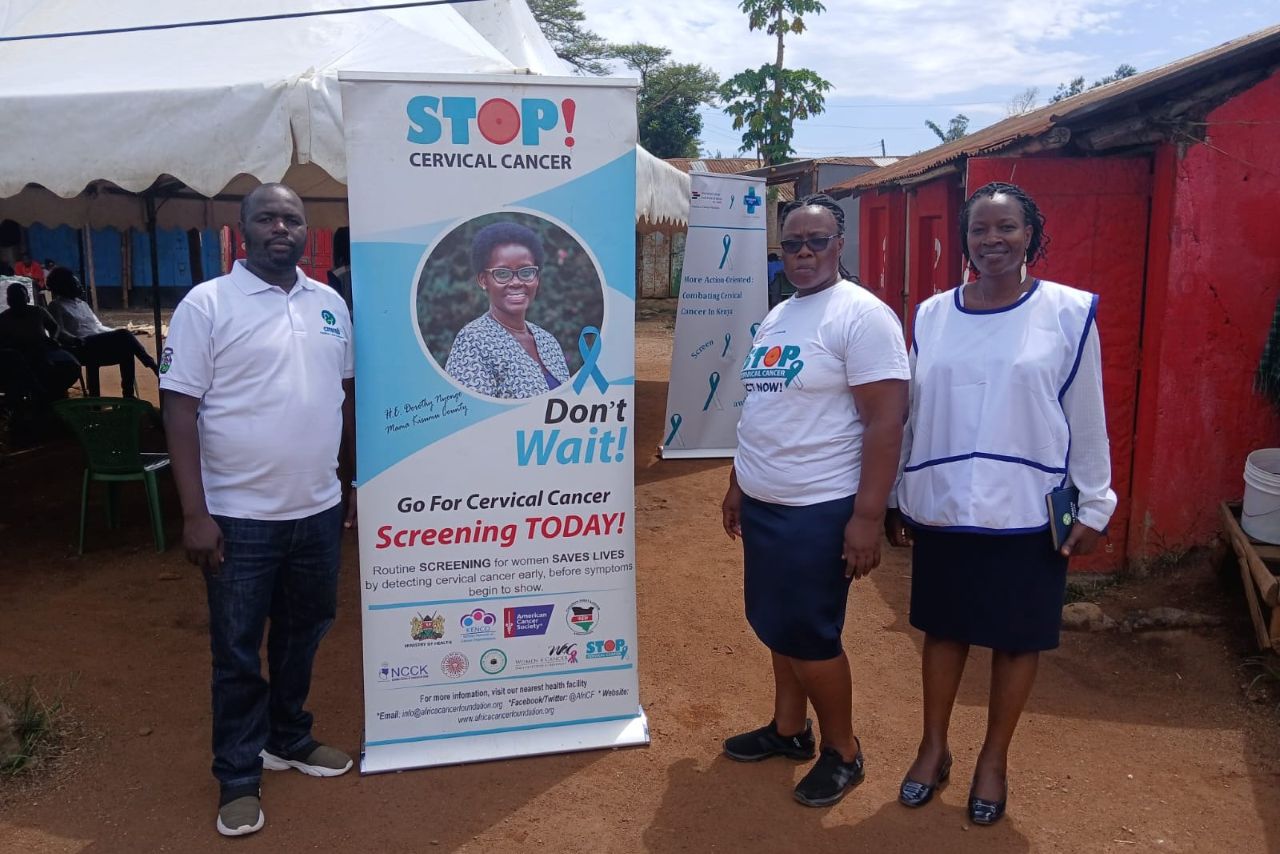
From 23–25 September 2026, Global Health Innovations (GHI) Kenya, in partnership with the Africa Cancer Foundation and the Kisumu County Ministry of Health, conducted a three-day free cancer screening outreach across Kisumu West, bringing essential cancer prevention and early detection services directly to community members. The outreach was hosted at Ojola Sub-County Hospital, with additional screening activities conducted at Ongalo Dispensary and Kisian Market.
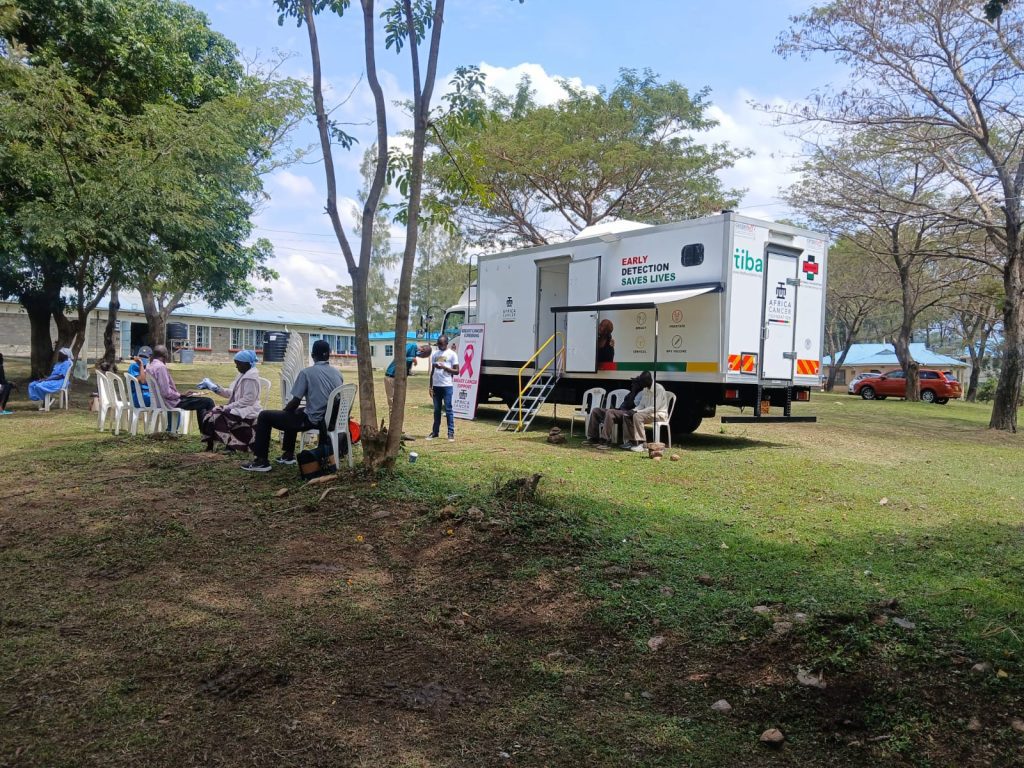 The initiative aimed to improve access to breast cancer, cervical cancer/HPV, and prostate cancer screening services by reducing barriers such as distance, cost, and limited access to specialized screening programs. Through a combination of facility-based and community-based service delivery, the outreach successfully demonstrated how strategic partnerships and innovative deployment models can expand access to lifesaving preventive healthcare services.
The outreach brought together multiple organizations committed to strengthening cancer prevention and early detection in western Kenya. GHI Kenya worked alongside the Africa Cancer Foundation, Kisumu County Ministry of Health, Ojola Sub-County Hospital, Ongalo Dispensary, community mobilizers, and local leaders to ensure services reached as many residents as possible.
Africa Cancer Foundation provided a fully equipped mobile clinic, screening supplies, and clinical personnel, while GHI Kenya coordinated mobilization efforts, operational logistics, records management, and data capture. Kisumu County Ministry of Health served as the host partner and provided critical local leadership and support throughout the event.
The outreach also leveraged GHI’s Community CATSystem, a digital cancer-tracking platform used to register clients, capture screening records, and support follow-up activities. The system was deployed using tablet devices across screening locations, demonstrating the role of digital health technologies in strengthening community-based cancer prevention programs.
Throughout the three-day outreach, healthcare teams provided:
Breast cancer screening
Cervical cancer and HPV screening
Prostate cancer screening
Client counselling and referral guidance
These services were offered FREE of charge to community members, helping remove financial barriers that often prevent individuals from seeking preventive healthcare.
While the outreach began at Ojola Sub-County Hospital, organizers quickly observed that attendance was lower than anticipated during the first day. Rather than maintaining a facility-only approach, teams adapted rapidly by extending services to nearby Ongalo Dispensary and later establishing screening stations at Kisian Market, one of the busiest community gathering points in the area.
The results were immediate and encouraging.
Two market shops were converted into private screening rooms for women, while men’s screening services were initially conducted in the mobile clinic and later extended directly into the market area. Additional community mobilization efforts, including public-address announcements, helped raise awareness and increase participation.
By the final day, approximately half of the outreach workforce was stationed at Kisian Market. GHI Kenya further strengthened the deployment by providing a tent and seating to improve client flow, waiting areas, and comfort. The market-based model proved highly successful and significantly increased community participation.
The screening numbers increased steadily each day as community-based services expanded and awareness grew. The experience reinforced the importance of meeting people where they live, work, and gather.
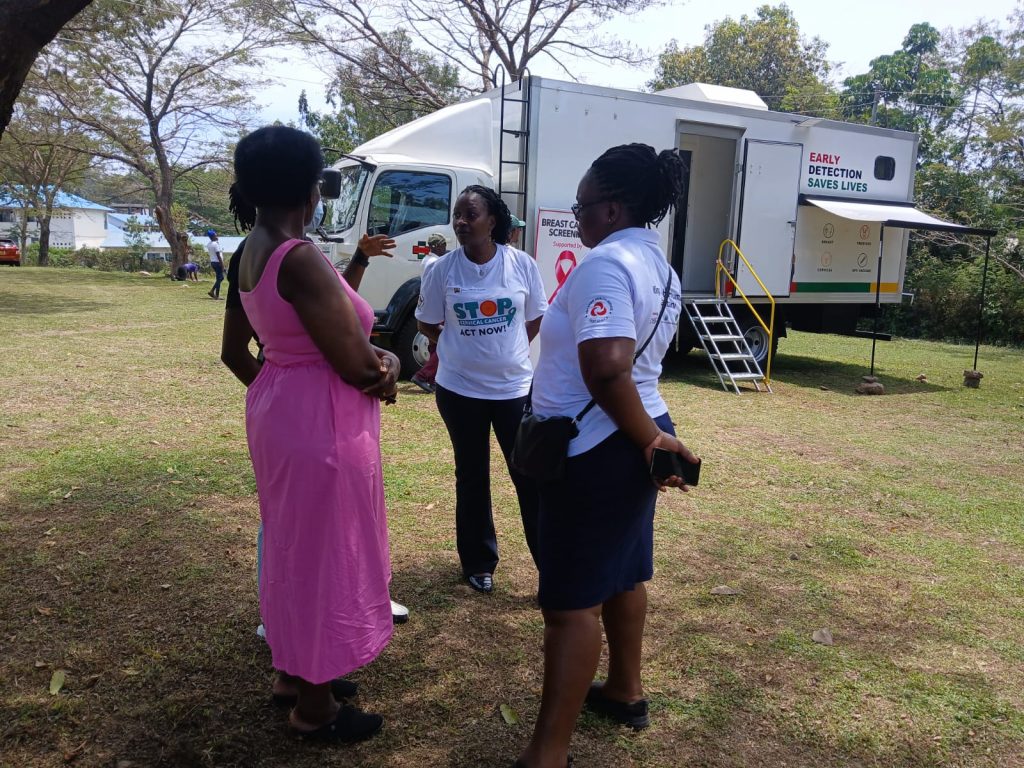 The outreach benefited from the participation of numerous healthcare professionals, volunteers, records officers, mobilizers, and community leaders. GHI Kenya’s team included Dr. May Maloba, Kevin Oyowe, Caroline Otieno, and volunteer Effie from Ojola.
The activity also received notable visits from Kisumu County First Lady Dorothy Nyong’o and Kisumu County CEC Health Dr. Gregory Ganda, who joined screening activities and helped support referrals identified through community outreach efforts.
Community engagement efforts included SMS mobilization campaigns, collaboration with local health representatives, community health promoters, and public-address announcements that encouraged residents to take advantage of the free services.
One of the most important findings from the outreach was the effectiveness of combining facility-based services with community-based deployments. While health facilities remain essential referral and coordination centres, bringing screening services directly into community spaces significantly improved access and participation.
The outreach also highlighted the importance of:
Early and targeted community mobilization
Flexible operational planning
Dedicated counselling capacity
Reliable power and transport arrangements
Strong digital systems for data capture and follow-up
Market and community-centred deployment models for preventive health services
The Kisumu West outreach demonstrated the power of collaboration, innovation, and community-centred healthcare delivery. Through the combined efforts of GHI Kenya, Africa Cancer Foundation, Kisumu County Ministry of Health, healthcare workers, volunteers, and community leaders, hundreds of residents gained access to vital cancer screening services that may ultimately save lives through earlier detection and treatment.
As GHI Kenya continues to strengthen cancer prevention and digital health initiatives across the region, the lessons learned from Kisumu West will help shape future outreach programs. By expanding community-based screening models, strengthening referral pathways, and leveraging digital health technologies such as the Community CATSystem, future initiatives can reach even more people and contribute to improved cancer outcomes across Kenya.